

Why You Should Never Use Polyester as a Seal Coat for Epoxy
Introduction
Table of Contents
When it comes to working with epoxy resin, one of the most overlooked but critical steps is applying a proper seal coat. Many makers and DIY enthusiasts believe they can save time or money by substituting polyester resin or other alternatives for this first layer. At first glance, this idea might seem reasonable: polyester is cheaper, easier to find, and cures faster than epoxy. But the truth is, using polyester resin as a seal coat for epoxy almost guarantees project failure.
In this guide, we’ll break down the biggest epoxy seal coat problems that happen when people use the wrong resin. You’ll learn why polyester and epoxy are chemically incompatible, what types of physical issues occur, and how to avoid costly mistakes. By the end, you’ll understand why epoxy is the only resin you should ever use for a seal coat—no exceptions.
What Is a Seal Coat in Epoxy?
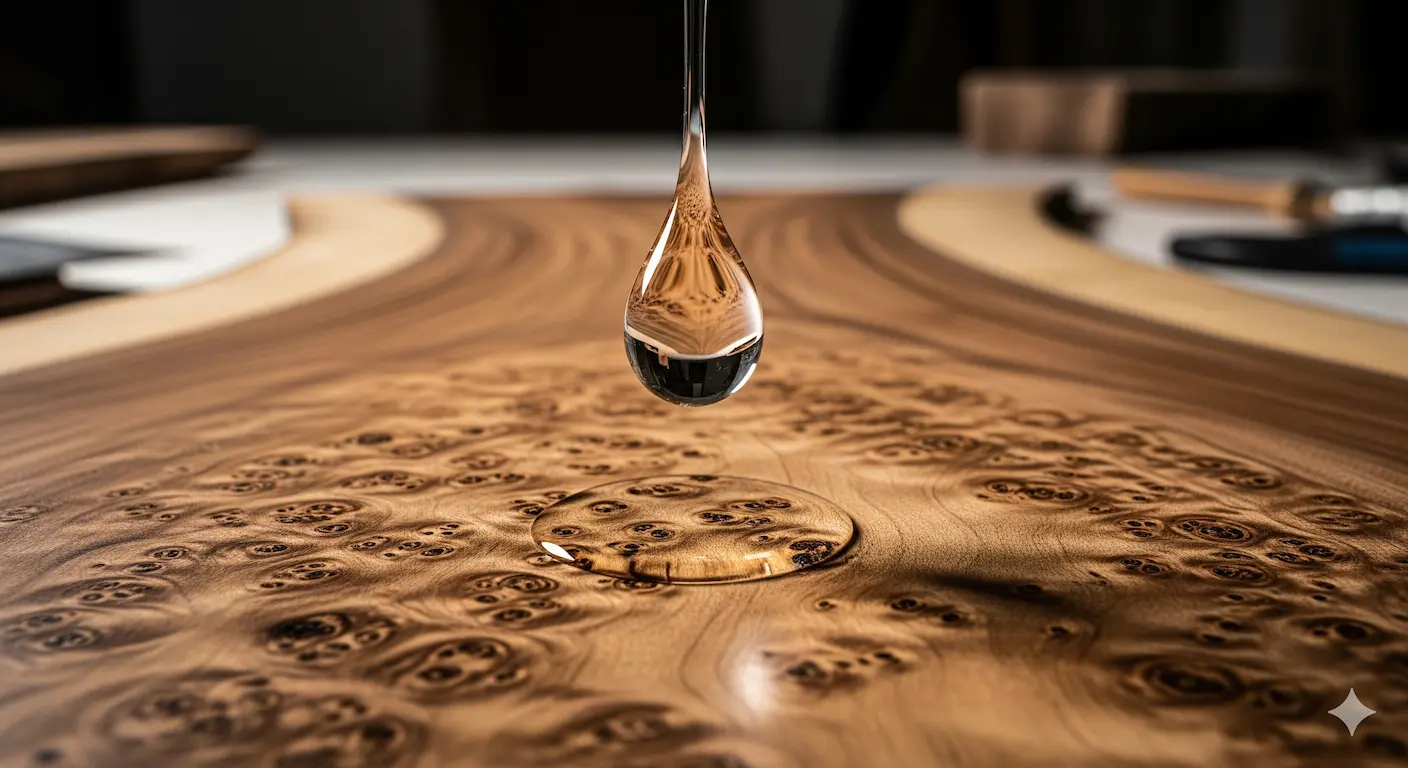
Before we dive into why we say never use Polyester as a Seal Coat for Epoxy, let’s clarify what a seal coat actually is. A seal coat is a thin layer of resin applied to the surface before pouring the main flood coat. Its primary role is preparation, not aesthetics.
A proper seal coat serves three main functions:
- Sealing Porous Surfaces – Wood, concrete, and MDF are naturally porous. Without sealing, air trapped inside escapes into the flood coat, creating hundreds of bubbles.
- Creating a Bonding Layer – The seal coat forms a sticky, chemically compatible foundation for the thicker epoxy flood coat. This ensures a strong bond and prevents delamination.
- Protecting the Substrate – A seal coat protects sensitive materials (like photographs, decals, or artwork) from being lifted or damaged when the heavier flood coat is poured.
In short: the seal coat is the foundation of the entire project. If you start with the wrong resin, the problems multiply at every stage.
Why People Use Polyester as a Seal Coat for Epoxy ?
Despite these risks, many beginners and even some experienced makers try using Polyester as a Seal Coat for Epoxy. The most common reasons are:
- Lower Price – Polyester is cheaper than high-quality epoxy. For budget-conscious DIYers, it feels like a shortcut.
- Faster Curing – Polyester cures in a fraction of the time. This speed seems appealing if you’re impatient or working under a deadline.
- Easy to Find – Polyester resin is widely available at auto-body shops and hardware stores, while epoxy often requires online ordering.
- Bad Information Online – Forums and social media posts sometimes claim that polyester “works fine” under epoxy. Unfortunately, this advice ignores the science.
Here’s the reality: epoxy and polyester are two completely different resin systems. Epoxy cures with an amine hardener system, while polyester cures with peroxide catalysts. These reactions don’t bond at a molecular level, which means epoxy won’t properly adhere to polyester. The result? Seal coat failure.
Using polyester as a seal coat doesn’t just create minor cosmetic issues—it can destroy your project. Problems like fisheyes, cratering, delamination, and uneven curing often show up immediately or within weeks.
Chemical Incompatibility: Why using Polyester as a Seal Coat for Epoxy Fails?
The number one reason you should never use polyester or any non-epoxy resin as a seal coat is chemical incompatibility. Even though both materials are clear liquids that harden into glossy finishes, the chemistry behind them is radically different.
Epoxy Curing Process
Epoxy resin cures through a reaction between epoxide groups and an amine-based hardener. This reaction forms long, crosslinked polymer chains. The result is a strong, flexible, and highly adhesive material that bonds at a molecular level with most substrates, including wood, metal, and cured epoxy itself.
- Key Feature: Epoxy is self-bonding. Fresh epoxy layers chemically fuse with previous ones as long as they are within the curing window.
- Benefit: This creates a single, seamless structure that is resistant to peeling, delamination, and environmental stress.
Polyester Curing Process
Polyester resin, on the other hand, cures through a free-radical polymerization process using a peroxide catalyst (commonly MEKP). The chains formed are shorter, more brittle, and less adhesive compared to epoxy.
- Key Feature: Polyester has very limited surface bonding ability once cured.
- Drawback: It relies on mechanical adhesion (like sanding scratches) rather than true chemical fusion.
Why They Don’t Bond Together
When you pour epoxy over polyester (or vice versa), the two curing systems do not interact. There is no crosslinking between epoxide and peroxide reactions. At best, the epoxy “sits” on top of the polyester layer like a sticker. At worst, contaminants, incomplete curing, or trapped styrene vapors in polyester actively repel the epoxy layer, creating surface defects.
This mismatch leads directly to the most common epoxy seal coat problems:
- Delamination – The epoxy flood coat peels off in sheets because there is no chemical adhesion.
- Fisheyes and Cratering – Areas where epoxy refuses to spread evenly, leaving bare spots.
- Soft or Sticky Patches – Peroxide residues or incomplete polyester cure inhibit epoxy from curing properly.
- Premature Failure – Even if the project looks good at first, within weeks or months the epoxy layer starts lifting, cracking, or clouding.
Real-World Example: The “Two-Week Disaster”
Consider a woodworker who tries to save $20 by sealing a walnut slab with polyester resin before pouring a deep-pour epoxy flood coat. Initially, the surface looks fine. The epoxy levels smoothly and cures clear. The customer is happy and pays for the table.
But two weeks later, micro-bubbles and cloudy patches begin to appear. Soon, large areas of epoxy start lifting at the edges. Moisture sneaks under the polyester, and the entire tabletop delaminates. Repairing this isn’t just a matter of sanding a spot—it requires stripping the entire surface down to bare wood and starting over. The cost? Easily hundreds of dollars in wasted resin, plus hours of labor.
This isn’t an isolated case. It’s a common story shared in epoxy forums, workshops, and repair shops. And almost always, the root cause is the same: someone used polyester resin as a seal coat.
Why Seal Coat Compatibility Matters More Than Flood Coat
You might think: “If the flood coat is epoxy, doesn’t that protect the project?” Unfortunately, no. If the foundation (seal coat) is weak, the whole system is compromised.
- Porous Surfaces Stay Unsealed – Polyester doesn’t penetrate and seal pores as effectively as epoxy, so bubbles continue to escape.
- No Chemical Link – The flood coat doesn’t bond to the base layer. This creates a sandwich of incompatible materials.
- Stress Amplification – As wood or substrate expands and contracts with humidity, the weak polyester–epoxy interface becomes the failure point.
The bottom line: once polyester is used, the project is living on borrowed time.
Physical Problems in Real Projects
Chemical incompatibility explains why epoxy seal coat problems happen on a molecular level. But for makers, the science becomes painfully real in the form of visible, physical defects that ruin the project’s appearance and durability. When polyester or other non-epoxy resins are used as a seal coat, these problems are almost guaranteed to appear—sometimes immediately, sometimes weeks later.
Fisheyes and Cratering
One of the most common symptoms of using polyester under epoxy is fisheyes. These are small circular spots where epoxy pulls away from the surface instead of leveling smoothly. The result is bare patches that look like tiny craters.
- Cause: Residual styrene in polyester and surface tension differences repel epoxy. Instead of flowing evenly, the epoxy beads up.
- Result: Dozens or even hundreds of fisheyes across a surface. Sanding and recoating is often required, which means wasted time and materials.
Even worse, applying more epoxy on top doesn’t always fix the issue. If the base layer is incompatible, fisheyes keep reappearing with every coat.
Delamination
Perhaps the most destructive epoxy seal coat problem is delamination. This happens when the flood coat cures but never truly bonds to the polyester underneath.
- Early Signs: Edges begin to lift, or tapping the surface produces a hollow sound.
- Progression: Over time, entire sections of epoxy peel away like sheets of plastic.
- Impact: The project loses structural integrity, and repairs are rarely possible without starting over.
Delamination is more than cosmetic. In high-stress applications like bar tops or tabletops, peeling layers create sharp edges and dangerous surfaces. For professional makers, this can mean losing both the project and the client’s trust.
Soft Spots and Incomplete Cure
Another issue is soft or sticky patches in the epoxy. Even when the flood coat is mixed and poured correctly, the underlying polyester can interfere with curing.
- Cause: Unreacted peroxide catalyst or trapped styrene vapors from the polyester layer.
- Effect: Certain spots of epoxy never harden properly. They remain tacky to the touch or dent easily under pressure.
- Long-Term Problem: These weak spots attract dust, stain easily, and eventually lead to cracks.
Soft spots are especially frustrating because they often appear randomly across the surface, making them impossible to predict or repair selectively.
Yellowing and Brittleness
Polyester resin is notorious for yellowing when exposed to UV light. When used under epoxy, this discoloration can bleed through, giving the entire surface a cloudy or amber tone long before the epoxy itself would have aged.
Additionally, polyester is more brittle than epoxy. When stress, humidity, or temperature changes occur, the polyester layer can crack. These cracks then telegraph through the epoxy layer, leaving visible lines or fractures on what should have been a flawless surface.
Why These Problems Multiply
The worst part about these physical issues is how they compound over time. A single fisheye today can turn into a large delaminated section tomorrow. A soft patch can become a crack under a coffee mug. And yellowing only worsens as months pass.
What started as a shortcut to save a few dollars quickly becomes a series of escalating failures. In many cases, makers spend more money on sanding, re-pouring, and repairing than they would have if they had simply used epoxy as the seal coat from the start.
Long-Term Risks
Epoxy projects are meant to last. A properly mixed and applied epoxy surface can endure for years, even decades, with minimal maintenance. But when the foundation is compromised by using polyester or another incompatible resin as the seal coat, long-term risks are unavoidable.
Structural Weakness
The lack of chemical bonding between epoxy and polyester means the surface is always at risk of separation. Wood expands and contracts with changes in humidity. Concrete breathes moisture. Even small vibrations from daily use can stress the weak bond. Over time, the epoxy layer begins to detach—often in large sheets—leaving behind an unsalvageable mess.
Hidden Moisture Problems
Polyester resin does not seal porous surfaces as effectively as epoxy. That means tiny air pockets and micro-channels remain beneath the surface. Months later, these pathways allow moisture to creep under the epoxy flood coat. The result is cloudy patches, bubbling, or mildew growth trapped beneath the glossy finish. By the time you notice the damage, the only solution is complete removal and refinishing.
Costly Rework
Every maker who has repaired an epoxy failure knows the nightmare: sanding, grinding, re-pouring, and hoping the substrate isn’t ruined. Projects that should have lasted years often fail in less than one season when polyester is used as the base. In professional terms, this isn’t just wasted material—it’s lost credibility and unhappy customers.
The Right Way: Always Use Epoxy for the Seal Coat
The solution to all of these epoxy seal coat problems is straightforward: always use epoxy for both the seal coat and the flood coat.
- Use Low-Viscosity Epoxy: A thinner epoxy penetrates pores better, creating a solid foundation.
- Apply Evenly: Brush or roll a thin layer, ensuring complete coverage.
- Allow Partial Cure: Wait until the seal coat is tacky—not fully hard—before applying the flood coat. This ensures maximum chemical bonding.
- Follow Manufacturer’s Instructions: Ratios, mixing times, and recommended temperatures vary. Cutting corners here often leads to failure, even with epoxy.
By sticking to epoxy throughout, you create a chemically unified structure that resists delamination, fisheyes, and long-term failure.
Case Study: Repairing a Failed Project
One workshop reported a customer who sealed a cedar slab with polyester resin before applying a two-inch deep-pour epoxy flood coat. Within three weeks, cracks and yellow streaks appeared. By the fourth week, the flood coat separated from the slab entirely.
The repair required:
- Removing the entire epoxy layer with heat and scrapers.
- Sanding the wood back to bare surface.
- Re-sealing with a thin epoxy coat.
- Pouring a new flood coat.
The cost of wasted resin alone exceeded $250. Add labor and time, and the “cheap” polyester shortcut turned into a $500+ mistake. Had epoxy been used from the start, the project would have been flawless.
Frequently Asked Questions (FAQ)
Why won’t epoxy stick to polyester resin?
Epoxy and polyester cure through completely different chemical reactions. Epoxy uses an amine-based system, while polyester cures with a peroxide catalyst. Because these reactions don’t crosslink, epoxy can’t chemically bond to polyester. At best, it relies on weak surface tension; at worst, it pulls away, creating fisheyes and delamination.
Can I sand polyester before applying epoxy to improve adhesion?
Sanding can improve mechanical grip, but it cannot fix the chemical incompatibility. Even if epoxy seems to bond at first, the lack of crosslinking means the project will fail under stress, humidity, or temperature changes. The surface might look fine for a few weeks, but peeling, clouding, or cracking are inevitable.
What’s the difference between a seal coat and a flood coat?
Seal Coat: A thin first layer of epoxy brushed or rolled onto the surface. Its purpose is to seal pores, prevent bubbles, and create a bonding foundation.
Flood Coat: A thicker pour (⅛”–¼”) designed for building depth, gloss, and durability.
Both must be epoxy. Mixing resin systems leads to seal coat problems.
How do I fix fisheyes in epoxy?
If fisheyes appear because of polyester underneath, no quick fix will last. Sanding and re-coating might help temporarily, but the defect usually reappears. The only permanent solution is to sand down to the bare substrate and restart the project using epoxy for the seal coat.
Is polyester resin ever acceptable under epoxy?
No. Even if some online sources claim it’s possible, real-world evidence shows failure is inevitable. Epoxy requires epoxy as its base. Mixing systems is always a recipe for wasted materials and frustration.
Step-by-Step Checklist: How to Apply an Epoxy Seal Coat Properly
- Prepare the Surface – Sand wood or substrate with 120–150 grit. Remove dust with a vacuum and lint-free cloth. Ensure the surface is dry and free of oils.
- Measure Accurately – Use a digital scale or marked cups. Mix epoxy and hardener at the exact ratio recommended by the manufacturer.
- Mix Thoroughly – Stir for 3–5 minutes, scraping sides and bottom. Transfer to a second clean cup (“double mixing”) for best results.
- Apply Thin and Evenly – Use a brush, roller, or gloved hand. Spread a thin layer across the entire surface, working epoxy into pores.
- Watch for Bubbles – Use a heat gun or torch lightly to remove surface bubbles. Avoid overheating, which can cause ripples.
- Timing Is Key – Allow the seal coat to cure until tacky (not fully hard). Apply the flood coat within this window to ensure chemical bonding.
- Environment Matters – Ideal temperature: 70–75°F (21–24°C). Humidity below 60% for best curing conditions.
Following this checklist ensures your seal coat bonds properly, prevents bubbles, and creates a flawless base for your flood coat.
Conclusion
Using polyester or other resins as a seal coat may seem like a shortcut, but it always leads to epoxy seal coat problems. From fisheyes and delamination to yellowing and hidden moisture issues, the evidence is clear: Seal Coat = Epoxy. Always.
Save yourself time, money, and frustration by using the right material from the beginning.